
Innovative Electric Solutions

How Azzip’s Home Office Is Turning Sunlight Into Long-Term Value
Howie Heerdt • June 18, 2026
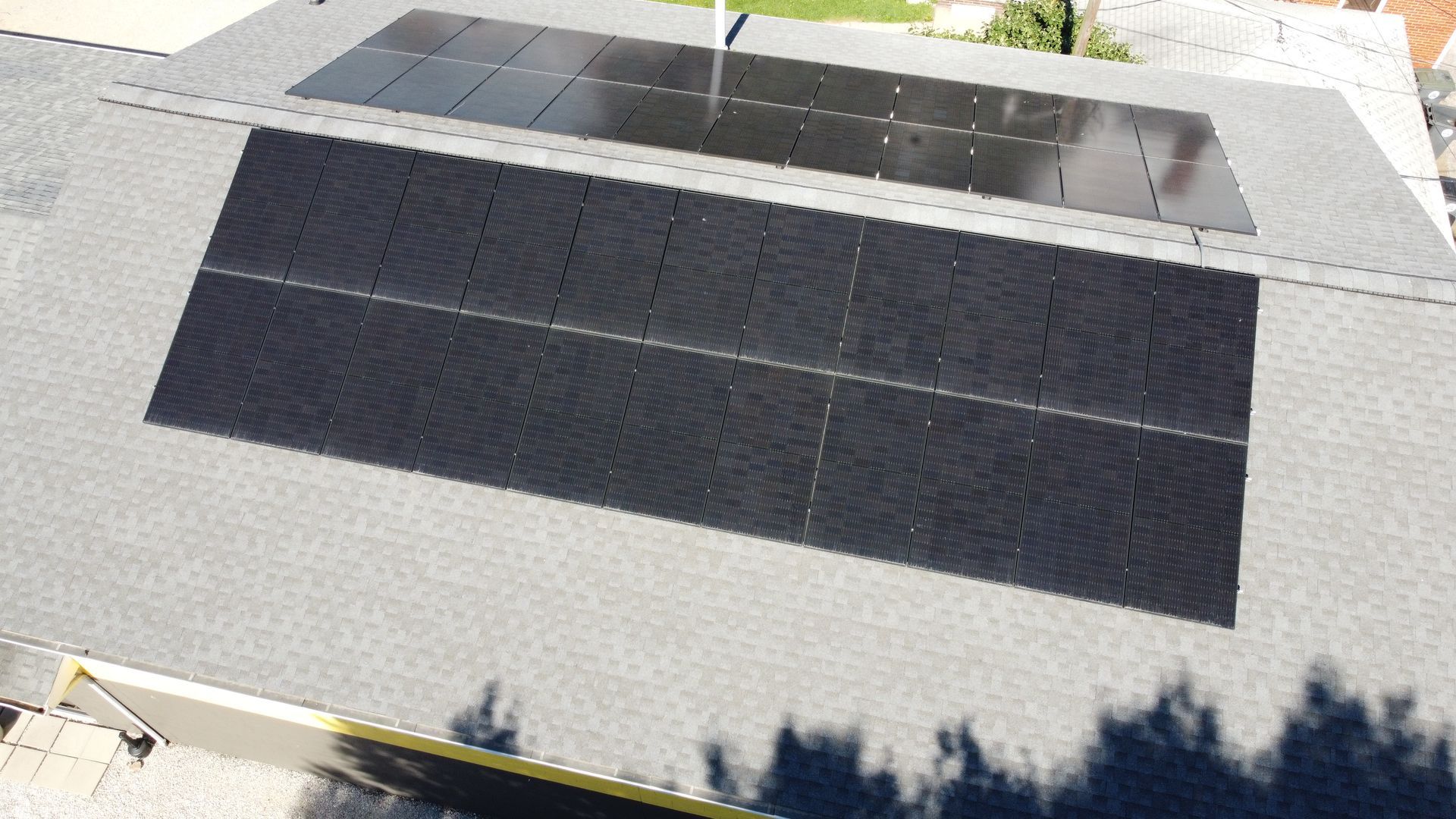
Morton Electric’s 17.6 kW rooftop solar project is designed to produce an estimated 21,869 kWh of clean energy each year for Azzip’s Evansville home office.
Case Study
For a growing local business, energy is more than a monthly bill. It is part of the cost of serving customers, supporting a team, and keeping operations steady year after year. That is why the rooftop solar project at Azzip’s Evansville home office is a strong example of what commercial solar can do for a business with deep local roots.
According to the signed project contract, Morton Electric designed a grid-tied 17.6 kW rooftop solar system for Azzip’s home office at 810 W Franklin Street in Evansville. The system was estimated to produce 21,869 kilowatt-hours, or kWh, of electricity each year. For a business, those kWh matter because they represent real energy that can be produced on-site instead of purchased from the utility.
What 21,869 kWh Actually Means
A kilowatt-hour is a simple way to measure energy over time. A kilowatt measures power at a moment; a kilowatt-hour measures how much energy is produced or used. In other words, kWh is the number that shows up where business owners feel it most: usage, utility bills, and long-term energy planning.
The estimated 21,869 kWh annual production for Azzip’s home office works out to roughly 60 kWh per day on average. That does not mean the system produces the same amount every day, because sunlight, weather, seasonality, and site conditions all matter. But over the course of a year, the estimate gives Azzip a practical benchmark for how much energy the system is designed to contribute.
· Lower exposure to utility rate increases by producing a portion of the building’s electricity on-site.
· A clearer sustainability story, backed by a measurable annual production estimate rather than a vague claim.
· More visibility into performance through the monitoring package included in the project scope.
· A long-term asset on the roof that can keep producing value well beyond the first year of operation.
A Local Business With a Local Story
Azzip’s story also makes the project feel right for Evansville. The company says founder Brad Niemeier developed the idea while in college, won Purdue’s Burton D. Morgan Business Plan Competition, and sold the first Azzip pizza on February 5, 2014, in Evansville. Since then, Azzip has grown from a family-supported start-up into a regional fast-casual pizza brand with locations across Indiana and Kentucky.
The home office matters because it represents the backbone behind that growth. It is where the business can make longer-term decisions that affect restaurants, employees, and customers. Adding solar there is not just a roof upgrade. It is a practical investment in how the company powers the work behind the stores.
Why Morton Electric Was the Right Team
Morton Electric’s own history lines up with the job. Morton describes itself as a full-service licensed electrical contractor specializing in energy efficiency and renewable energy, with experience across residential, commercial, municipal, governmental, and utility projects. The company also points to a long regional track record, including work connected to the first net-zero public library in the United States and advocacy that helped expand renewable-energy access in Southwest Indiana.
That background matters on a commercial rooftop project. The work is not just placing panels. The contract included system design, mounting, inverters, conduits, utility interconnection, and monitoring. Morton Electric is also committed to performing the installation under National Electrical Code and local jurisdiction requirements, with a five-year workmanship warranty in addition to manufacturer warranties.
In plain terms, Morton did the job because this is exactly the kind of project Morton was built to handle: local, commercial, technically detailed, and tied to the bigger goal of making renewable energy more accessible for businesses in the Tri-State.
The Bigger Benefit
Solar projects are often described in panels, inverters, and tax credits. Those details matter, but the real story is what the system produces after the installation is complete. Every kWh generated on Azzip’s roof is energy that can help support the company’s home office, reduce dependence on purchased electricity, and turn unused roof space into a working business asset.
For Azzip, the project adds a visible sustainability step to a company already known for local creativity and growth. For Morton Electric, it is another example of a regional business helping another regional business take control of its power. And for other business owners watching from the sidelines, it shows that the benefits of solar start with a practical question: how many kWh could your roof be producing for you?
You might also like
How precision engineering, custom panel fabrication, and rigorous testing turn complex automation into reliable plant floor operations.

Key Considerations for Choosing the Right Partner for Your Industrial and Commercial Power Needs
Compare the advantages of Tesla Powerwall storage against traditional standby generators before making your next backup power investment.